
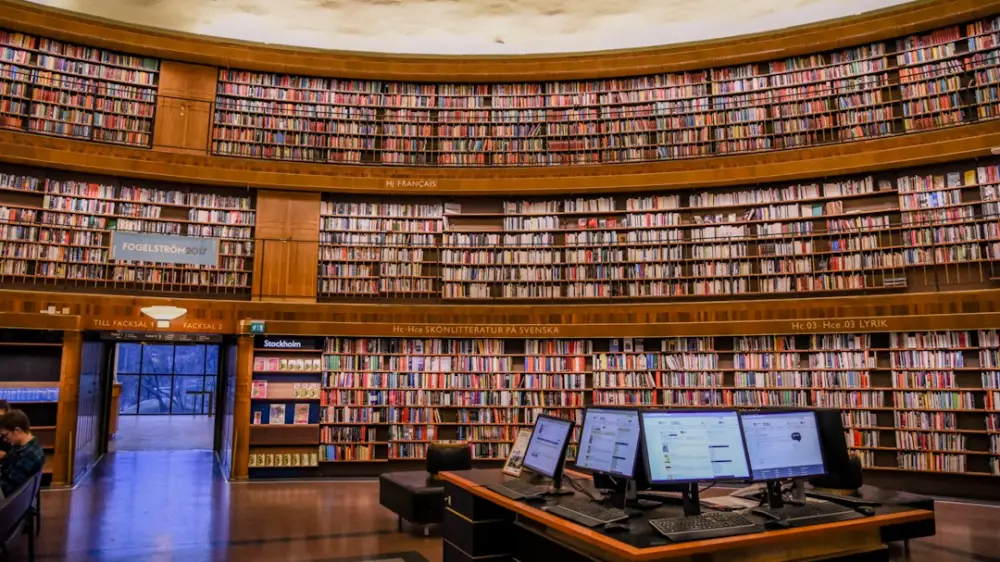
Digital knowledge archives are organized, electronic collections of digitized or born-digital documents, media, and records. These archives ensure the long-term preservation of cultural and scientific data, making historic publications accessible online. In 2026, they serve as vital resources for education, helping researchers and the public navigate information in an increasingly digital world.
A digital archive preserves records for future use, rather than simply ranking search results. Descriptive metadata helps readers identify an item, trace its origin, and understand its context. Preservation also requires maintaining the files so they remain accessible as software and storage systems change.
Digitized vs. Born-Digital Content
Modern archives handle two primary types of material. Digitized content refers to physical items—parchment manuscripts, 35mm film, or analog cassette tapes—that have been scanned or recorded into a digital format. This process often involves Optical Character Recognition (OCR), which converts the text in an image into searchable data. Born-digital content, on the other hand, originates in a digital environment. This includes emails, social media threads, and interactive datasets that never existed on paper. Managing these requires different strategies, such as web crawling tools that capture the functional state of a website at a specific moment in time.
Digital Preservation and the Bodley Warning
The stability of digital information is surprisingly fragile. Richard Ovenden, the Bodley’s Librarian at the University of Oxford, has frequently warned that society faces a "digital dark age" if preservation is not prioritized. While a book printed on acid-free paper can last 500 years, a digital file stored on a standard hard drive may become unreadable within a decade due to hardware failure or software obsolescence. The "Bodley Warning" emphasizes that libraries must actively manage digital records to prevent the loss of our collective memory.
To combat this, archives employ a strategy known as "migration." This involves periodically moving data from old file formats to new ones before the old software disappears. Another method is "emulation," where modern computers run legacy software to open obsolete files. For example, a researcher in 2026 might use an emulator to access a database originally created in the 1990s. Without these active interventions, the records of our current decade could vanish, leaving a hole in the historical record that future generations cannot fill.
The Role of Bit-Level Preservation
Preservation also happens at the most basic level of data. Archives use "checksums"—unique digital fingerprints for files—to monitor for "bit rot." Bit rot occurs when the physical medium of a storage device degrades, causing small errors in the binary code. By regularly running these checksums, archivists can identify corrupted files and replace them with healthy copies from geographic backups. This technical rigor ensures that a scientific paper accessed today is identical to the version published twenty years ago.
Rising Demand for Online Historic Publications
There is a growing public appetite for primary source materials. This demand is driven by genealogists, local historians, and citizen scientists who require access to records that were once locked in physical reading rooms. Digital archives have democratized this access, allowing a student in a remote area to examine the same 18th-century ship logs or census records as a professor at a major university. Platforms like the British Newspaper Archive or the Library of Congress’s Chronicling America project have made millions of pages of history searchable by keyword.
This accessibility has changed how we conduct research. Instead of spending weeks traveling to various physical locations, a researcher can now use cross-archive search tools to find mentions of a specific event across multiple international repositories simultaneously. This interconnectedness allows for a more nuanced understanding of history, as it becomes easier to compare how different regions reported on the same global events. For those looking to start their own journey into these repositories, exploring the top 10 free online knowledge resources provides a practical entry point into the world of open-access data.
Libraries, Education, and Information Literacy
As archives grow, the role of the library has shifted from being a gatekeeper of books to a guide for information literacy. In 2026, finding information is rarely the problem; the challenge lies in verifying its authenticity. Libraries now focus heavily on teaching users how to navigate digital archives effectively. This includes understanding how to use Boolean operators (AND, OR, NOT) to refine searches and recognizing the difference between a peer-reviewed digital record and an unverified web upload.
Information literacy also involves understanding the limitations of an archive. No archive is perfectly neutral. The selection of what gets digitized often reflects the biases of the era in which the archiving took place. Librarians help researchers identify these gaps, such as the underrepresentation of certain cultures or marginalized groups in historic records. By teaching these critical thinking skills, libraries ensure that digital archives are used not just as data dumps, but as tools for deep, contextual learning.
The Shift to Open Access
Understanding scholarly publishing is an important part of information literacy. Many researchers now seek out what open access academic e-journals offer to bypass the paywalls that often restrict scientific and humanities research. Libraries play a key role in negotiating these access rights, advocating for "Open Research" models where the public can benefit from taxpayer-funded studies without a subscription fee.
Global Initiatives and Publisher Partnerships
The scale of digital archiving today requires massive international cooperation. Projects like Europeana or the World Digital Library (supported by UNESCO) aggregate content from thousands of different institutions into a single interface. These initiatives rely on standardized protocols, such as the International Image Interoperability Framework (IIIF), which allows users to view, zoom, and compare high-resolution images from different archives side-by-side in a web browser.
Partnerships between public libraries and private publishers are also evolving. Many publishers now work with services like Portico or LOCKSS (Lots of Copies Keep Stuff Safe) to ensure that if a publishing house goes out of business, their digital journals remain accessible to the libraries that paid for them. This creates a safety net for the digital record. However, copyright remains a significant hurdle. The "20th-century black hole" refers to the vast amount of material published between 1923 and the early 2000s that is still under copyright but no longer in print, making it difficult for archives to legally share these works online.
- The Internet Archive: A non-profit library offering millions of free books, movies, and software versions.
- HathiTrust: A partnership of academic and research institutions offering a collection of millions of titles digitized from libraries around the world.
- Project Gutenberg: A volunteer effort to digitize and archive cultural works, focused mostly on older works in the public domain.
Accessing Digital Archives Through Ebrisa
Navigating the vast world of digital archives is a core component of modern lifelong learning. By understanding how these repositories function—from the technical preservation of bits to the complex legalities of copyright—you can better utilize them for your own discovery process. Whether you are looking for primary historical documents, scientific datasets, or rare cultural artifacts, the tools available in 2026 make it easier than ever to connect with the global record of human knowledge.
At Ebrisa, we focus on bridging the gap between complex information systems and the curious learner. By highlighting reliable archives and providing context for their use, we aim to make the process of discovery both practical and rewarding. Exploring these digital archives is more than just a search for facts; it is an engagement with the primary sources that shape our understanding of the world. Use the resources found on Ebrisa to refine your research techniques and uncover the wealth of history and science preserved in today’s digital vaults.